

Today’s blog dives into the crucial process of choosing the right mortgage product for you. Understanding the intricate world of mortgage rates is key, especially for first-time buyers like yourself. So, let’s look at the options together.
Navigating Fixed and Variable Rates: What Fits You Best?
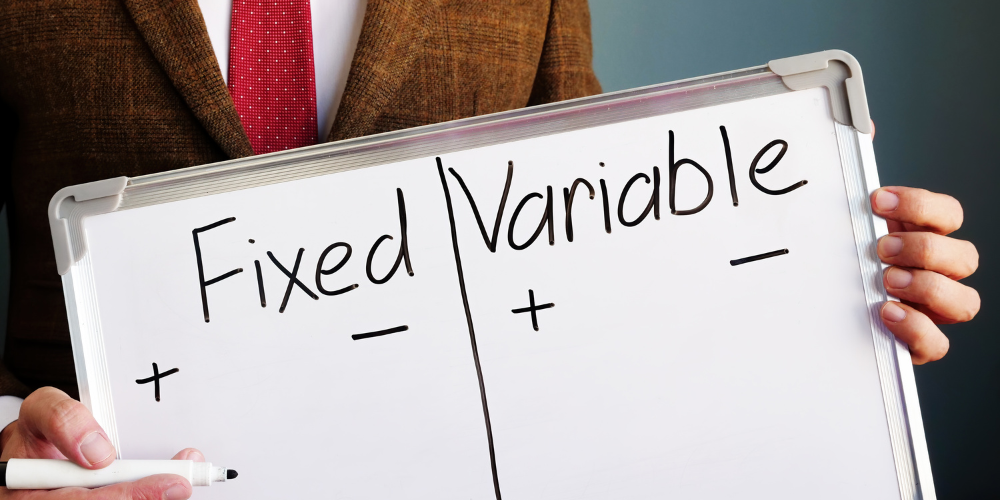
You’ve probably encountered the terms fixed rates and variable or tracker rates. Simply put, a fixed rate ensures your payment remains constant over a set period. Lenders often offer different fixed-rate products, ranging from one to ten years or even a lifetime.
To decide which mortgage rate is best for you as a first time buyer or for a next time buyer, you need to know and understand what rates are available to you.
Fixed rate mortgages
These fixed-rate options fluctuate with industry trends, responding to what lenders aim to promote at the moment. Among them, two- and five-year fixed rates are the most common. However, keep in mind the security these rates provide comes with potential early repayment charges, especially if you decide to remortgage during the fixed rate period.
When you select a fixed rate mortgage, because the bank has given you the security of having a fixed payment, they also want some security that you will stay with them for the full period of that fixed rate mortgage, so there is very often what is called an early repayment charge, if you decided to remortgage during your fixed rate period there could be a fee for you to move away from that lender. Fees vary widely from lender to lender and it could be as much is 5% of the Mortgage amount that you initially borrowed, whereas others may do a reducing percentage over the fixed rate period.
Variable Payment mortgages
On the flip side, tracker, variable and discount rate mortgages by comparison can fluctuate so they will be tracking alongside (normally) either the lenders own standard variable rate or the Bank of England base rate and they will be charging a specific rate plus or minus an additional percentage, so you won’t have a set payment each month. This can mean that if you’re in a position where rates are decreasing, you could potentially benefit from reductions in payments. These rates historically have had the additional advantage of lower early repayment charges.
Which is the right mortgage for this situation
The times that I see variable mortgage rates being more applicable for people, is if you are planning on selling within the next year. Then you need that flexibility to be able to move lenders or repay this current mortgage without having to pay a large fee, in those situations these type of rates are absolutely helpful.
As a first-time buyer, having a clear picture of your monthly mortgage payment is vital for effective budgeting.
When choosing between fixed and variable rates, consider your personal circumstances. Knowing exactly what your monthly payment is going to be on your mortgage is key to helping you to budget. Particularly as a first time buyer in your first home or moving up into a new larger property, when you are not quite sure yet exactly what those new monthly bills will look like.
Once you’ve decided if you want a fixed or variable rate with the added flexibility, it’s time to decide how long you should take the rate for. Advisors often suggest starting with a two- or five-year product, but additional terms may suit you better based on your personal plans and goals.

Personalisation Over Prediction: Making Informed Choices
I mention your personal circumstances, because in my opinion, rather than looking at the economy and trying to second-guess something which many economists struggle to predict, it’s much better to consider what type of rate you want based on your circumstances, any mortgage that you take, should be tailored specifically to you what you need your plans and goals and dreams.
Make sure you’ve considered the type of property that you’re buying and your future plans:
- Is this property in your dream area?
- Does it need some significant work before you’d be looking at selling or moving?
- Does it have long-term prospects for you?
- Are you schools in the area if you’re planning a family
- Is there good access to transport links if you rely on those for work
All these things might suggest that you would be more comfortable with a longer term fixed-rate because if you are already pushing yourself into a higher payment bracket to make sure that you get that dream home, or you know that there is significant works you’d like to do to the house to make it your dream you may, and you have the funds available to do that then you may want to fix for a longer period to give you time to do all of those things.
However,
- If you are expecting a significant pay rise soon,
- If you are on a career path where you may need to move offices or move roles,
- If you are Buying in a new area that you don’t know or that is outside of your usual locations.
You may prefer the flexibility of a two-year product so that you can reassess your priorities and goals at the time making your mortgage work for you.

It’s all about getting this decision right.
In the complex landscape of economic predictions, it’s more prudent to base your mortgage decisions on your personal circumstances rather than trying to outguess the market. If rates are high and you’re stretching your budget, securing a five-year product can provide peace of mind. Conversely, if you have room in your budget to navigate potential rate fluctuations, a two-year option might align better with your goals.
Mortgage illustrations include a section projecting payments in case of interest rate increases. Your income’s stability is crucial, so choose a product that aligns with your advisor’s recommendation and, most importantly, your future plans. Failure to make mortgage repayments could lead to repossession, and that’s something we want to help you avoid.
Evergreen Mortgages: Your Partner for Long-Term Homeownership
At Evergreen Mortgages, we are committed to ensuring your home remains yours for the long term. Our focus is on making product decisions that work for you and your family—whether you’re a first-time buyer or planning for your next move. Reach out to us for personalised advice, tailored to your unique journey.
